


The “90% Rule” in Japanese Garbage Disposal
— A Practical Guide to Waste Separation in Japan —
Garbage disposal in Japan is known for being highly detailed and strictly regulated. Proper waste separation plays an essential role in environmental protection and resource recycling, but it can also be confusing and stressful—especially when items are made from multiple materials. Many people find themselves wondering: Is this burnable or non-burnable? Should I remove this tiny metal part?
To address these everyday dilemmas, Japan commonly uses a practical concept known as the “90% rule.”
What Is the 90% Rule?
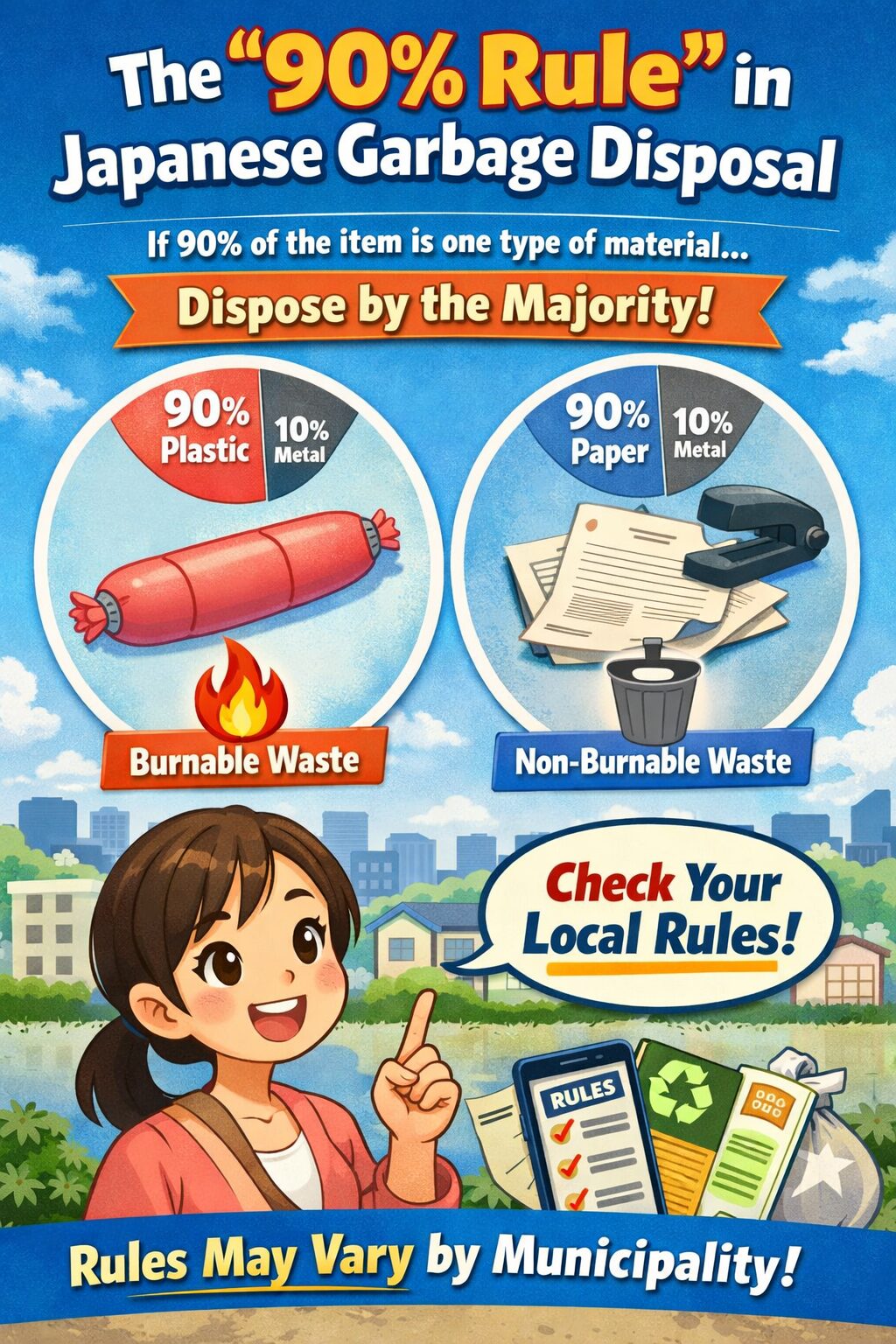
The 90% rule is a guideline that allows residents to dispose of waste based on the material that makes up the majority—roughly 90%—of the item.
If an item consists mostly of burnable material, it may be disposed of as burnable waste, even if a small portion (about 10%) is made of a different material such as metal. The same logic applies in reverse: if an item is mostly non-burnable, it can be classified as non-burnable waste.
This approach is consistent with guidance from Japan’s Ministry of the Environment and is intended to make waste separation more realistic and manageable in daily life. However, it is important to understand that this rule is not universally enforced nationwide and depends heavily on local municipal regulations.
Why the 90% Rule Exists
Modern consumer products are rarely made from a single material. Paper documents are often stapled, plastic containers may include metal springs or clips, and food packaging frequently combines plastic and aluminum.
While separating each material perfectly may seem ideal, it is often impractical and time-consuming. Overly strict requirements can discourage people from following garbage rules altogether. The 90% rule provides a balanced and realistic solution, allowing small amounts of mixed material to be tolerated so long as the primary material is clear.
In this sense, the rule is not about lowering environmental standards, but about making them sustainable for everyday use.
Common Examples of the 90% Rule
One well-known example is fish sausage packaging, a common food item in Japan.
The package is mainly plastic, but both ends are sealed with small metal clips. Technically, perfect separation would require cutting off the metal ends and disposing of them as non-burnable waste.
However, because the package is overwhelmingly plastic, many municipalities allow residents to dispose of it as burnable garbage without removing the metal parts. This is a classic application of the 90% rule.
Other typical examples include:
- Paper documents held together with staples
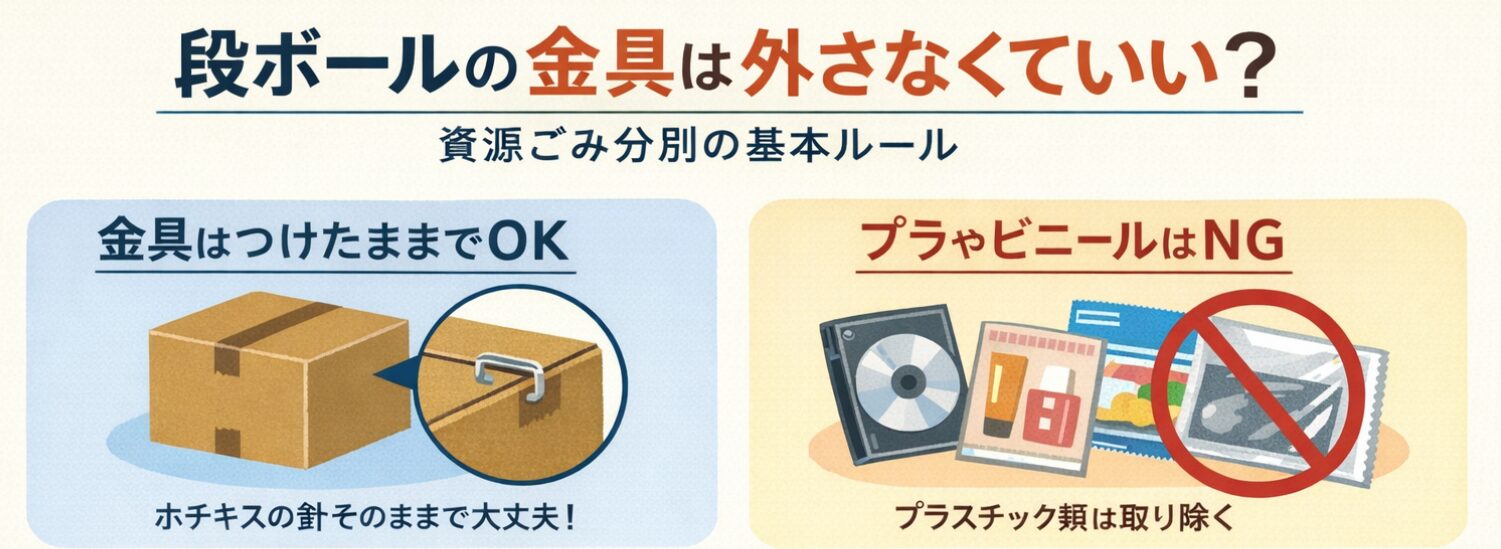
- Cardboard boxes with small metal handles
- Plastic items with tiny screws or springs
In such cases, removing the minor non-matching materials is often considered unnecessary if the main component is obvious.
Benefits of the 90% Rule
The greatest advantage of the 90% rule is reduced stress and effort in daily waste disposal. People spend less time worrying about small details and can dispose of garbage more efficiently.
It also improves safety. Attempting to remove small metal parts can result in injuries or require tools, which is not always practical or safe.
Most importantly, by lowering the psychological barrier to proper disposal, the rule encourages better overall compliance with garbage separation regulations.
A Critical Warning: Rules Differ by Municipality
Despite its usefulness, the 90% rule is not accepted everywhere. Garbage processing systems differ significantly from one municipality to another, depending on incineration methods, recycling facilities, and local policies.
An item classified as burnable in one city may require separation or be considered non-burnable in another. This is particularly important for people who have recently moved, as applying old habits to a new area can easily result in rule violations.
Residents should always check their local government’s official website, waste separation guide, or garbage-sorting app to confirm whether the 90% rule is permitted in their area.
What to Do If You’re Unsure
When you are unsure how to dispose of an item, the following steps are recommended:
- Check official municipal guidelines – this is always the most reliable solution.
- Apply the 90% rule only if your municipality allows it – dispose of the item according to its main material.
- If still uncertain, do not force disposal – consider keeping the item temporarily, or dispose of it under a broader category such as burnable or recyclable waste once confirmed.
Rushing to throw something away can lead to mistakes. Taking time to check the rules is a responsible and environmentally conscious choice.
The 90% Rule Is Not “Cutting Corners”
Finally, it is important to understand that the 90% rule is not an excuse for careless disposal. Rather, it is a practical guideline designed to support long-term, consistent participation in Japan’s waste management system.
Striving for perfection can be exhausting and counterproductive. By understanding local rules and using the 90% rule appropriately, residents can contribute effectively to environmental protection without unnecessary burden.
When used correctly and in accordance with local regulations, the 90% rule represents a smart, sustainable approach to garbage disposal in Japan.
コメント